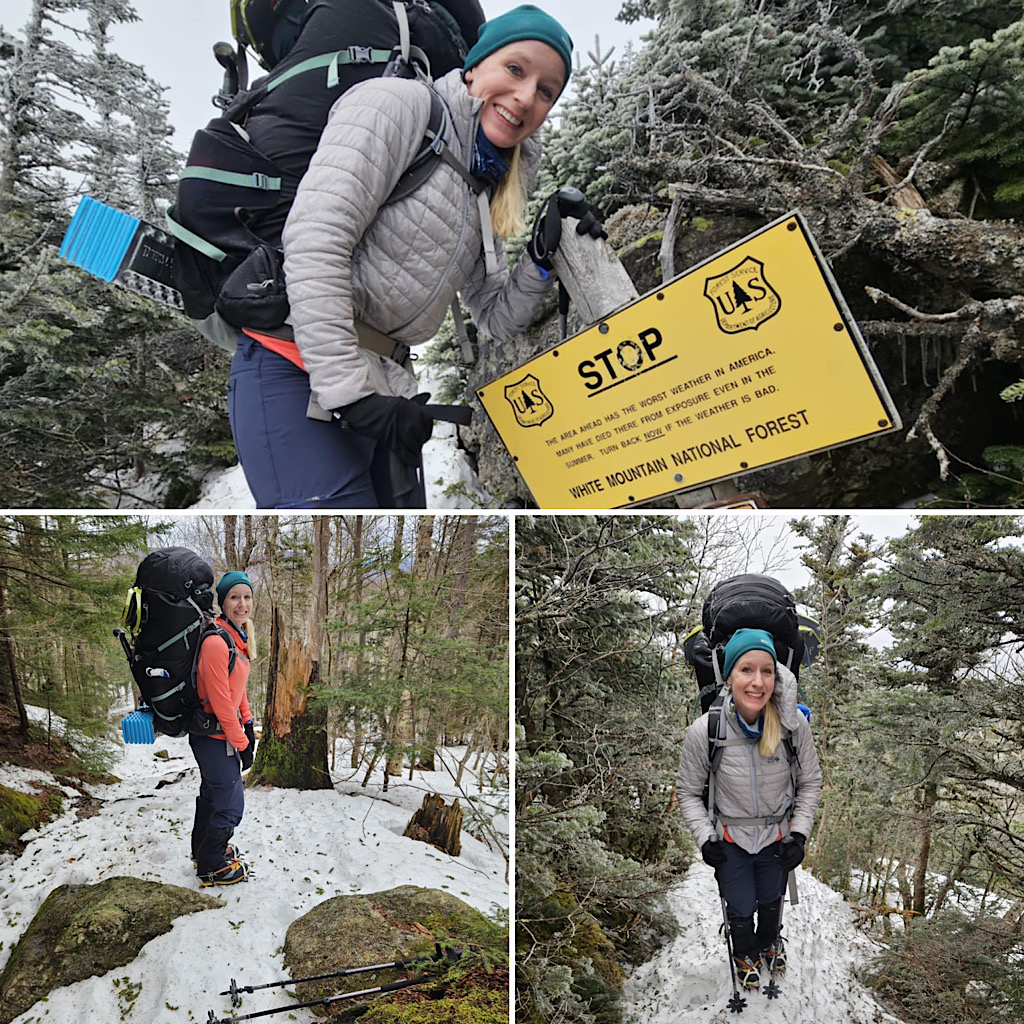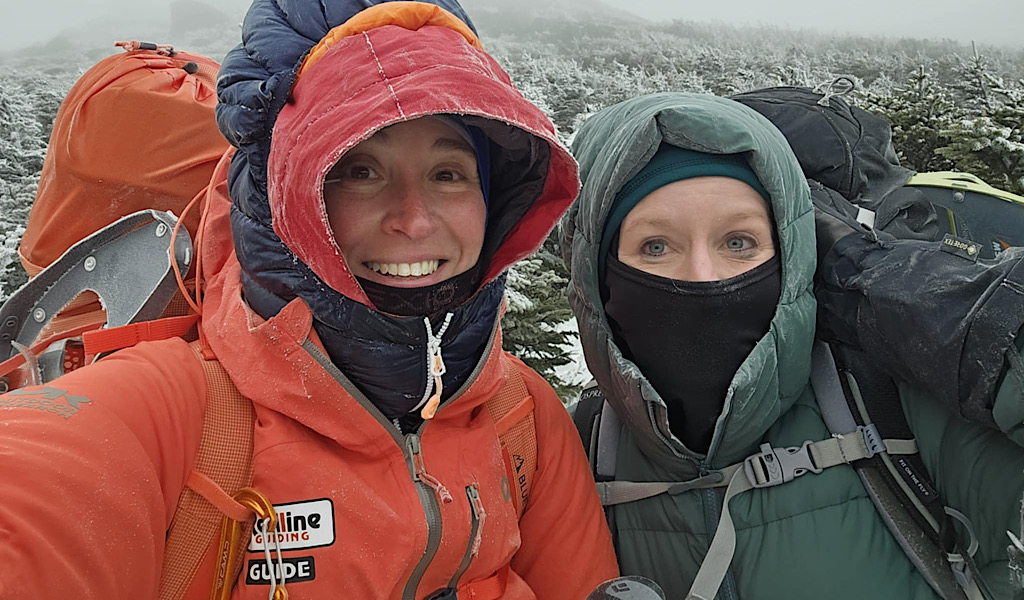
A person came to us hoping to do an overnight in the alpine as part of her prep for climbing Denali later this year. Training like this is fairly common for those taking on the world’s tallest mountains. Here in NH, especially on the Presidential Range, we have the terrain (excluding glaciers) and the mean mountain weather to provide a real world simulation without having to spend thousands of dollars, and take days or weeks off to get it done. Here in NH the alpine environment with all of its attributes, good and bad, is literally just a few hours from the trailheads. This accessibility is one of the reasons it’s so common for folks to get into trouble in our mountains, but it does make for a great training ground. Thanks to insane winds the team, led by Redline Guide Debra McCown, had to change plans, but there was still a solid training experience with it all. Here are the details…
When this trip date was scheduled, it was expected that it would take place on a winter snowpack with winter weather conditions that could, if she was lucky, mimic what the guest would experience in Alaska. But nature had other plans. A few days before the trip, a record-breaking thaw took place, melting feet of accumulated snow and obliterating the snowpack. While the weather was predicted to turn cold and windy on the first day of her trip, ground conditions were unstable.
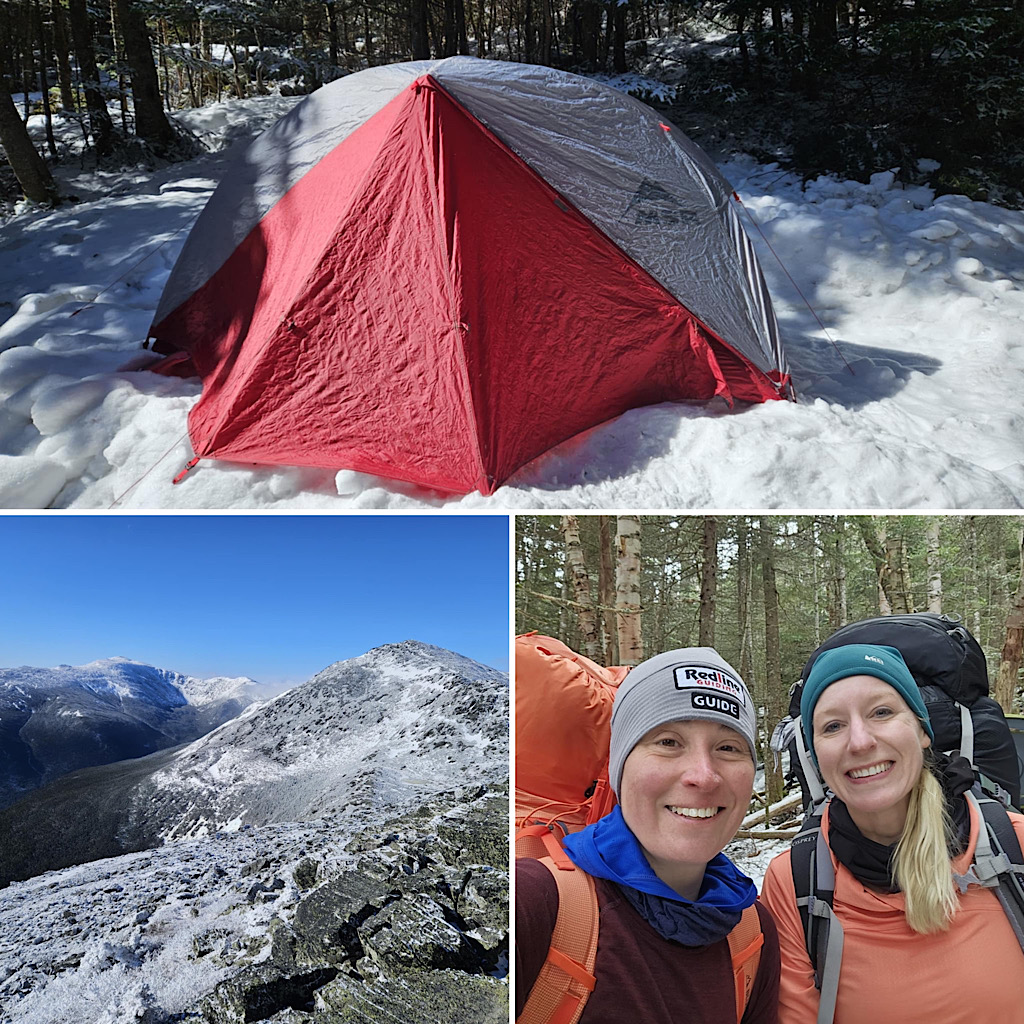
High winds with triple-digit gusts were predicted, and we started mid-morning, aiming to avoid the worst of a discouraging forecast. Our plan was to hike up Valley Way to treeline, follow the Gulfside Trail past Mt Adams, and camp above treeline in the Edmands Col area, somewhere with the minimum two feet of snow required by Forest Service rules.
The forecast winds made summit attempts on this day unwise. And with high winds, below-zero temperatures, and wind chills as low as -45F predicted overnight, we knew we’d need time to set up a solid camp.
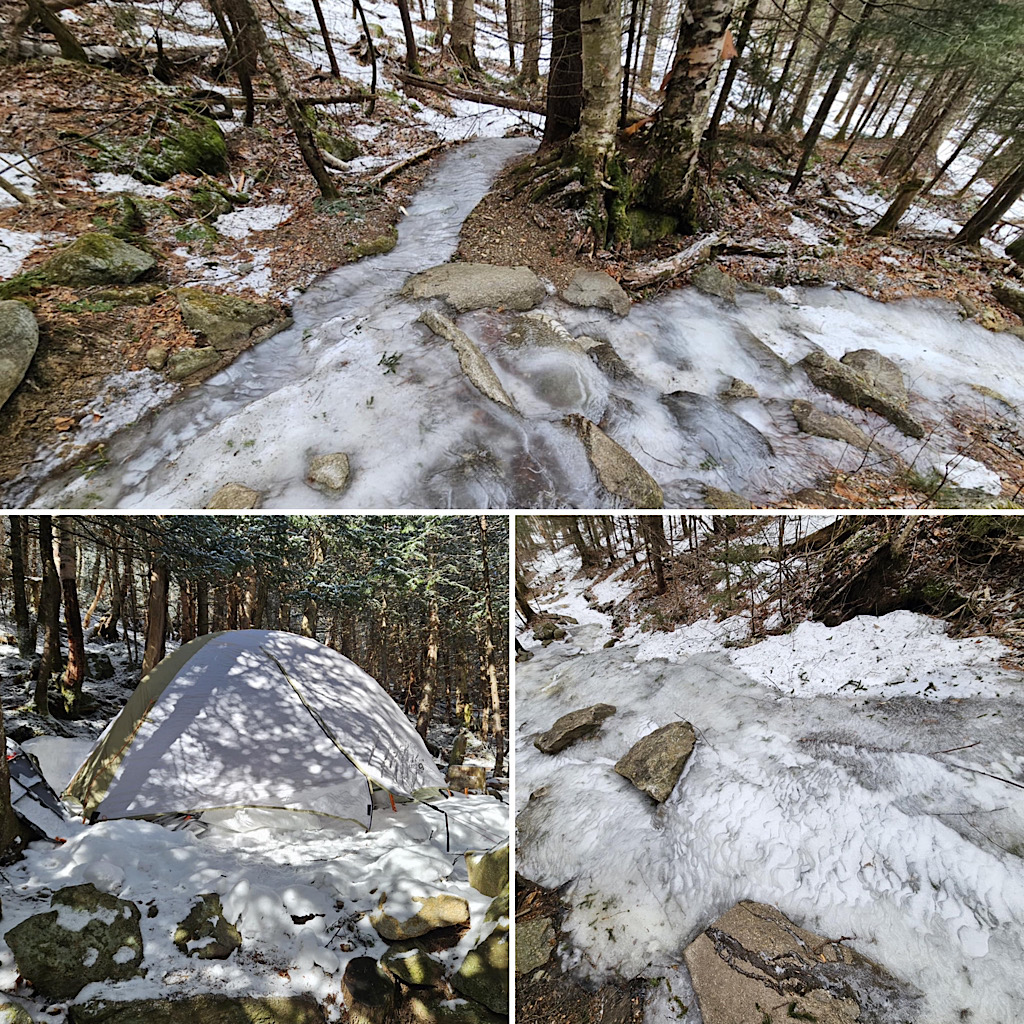
On the second day — with less wind and clearer skies predicted — we planned to visit Mt Washington, possibly adding additional summits on our return. But, as it turned out, the trails were in awful shape. Valley Way was saturated from snowmelt, with standing water everywhere. The monorail — the raised snow surface that often develops on trails as snow melts in the spring — was falling apart. Even stepping cautiously, we fell through repeatedly.
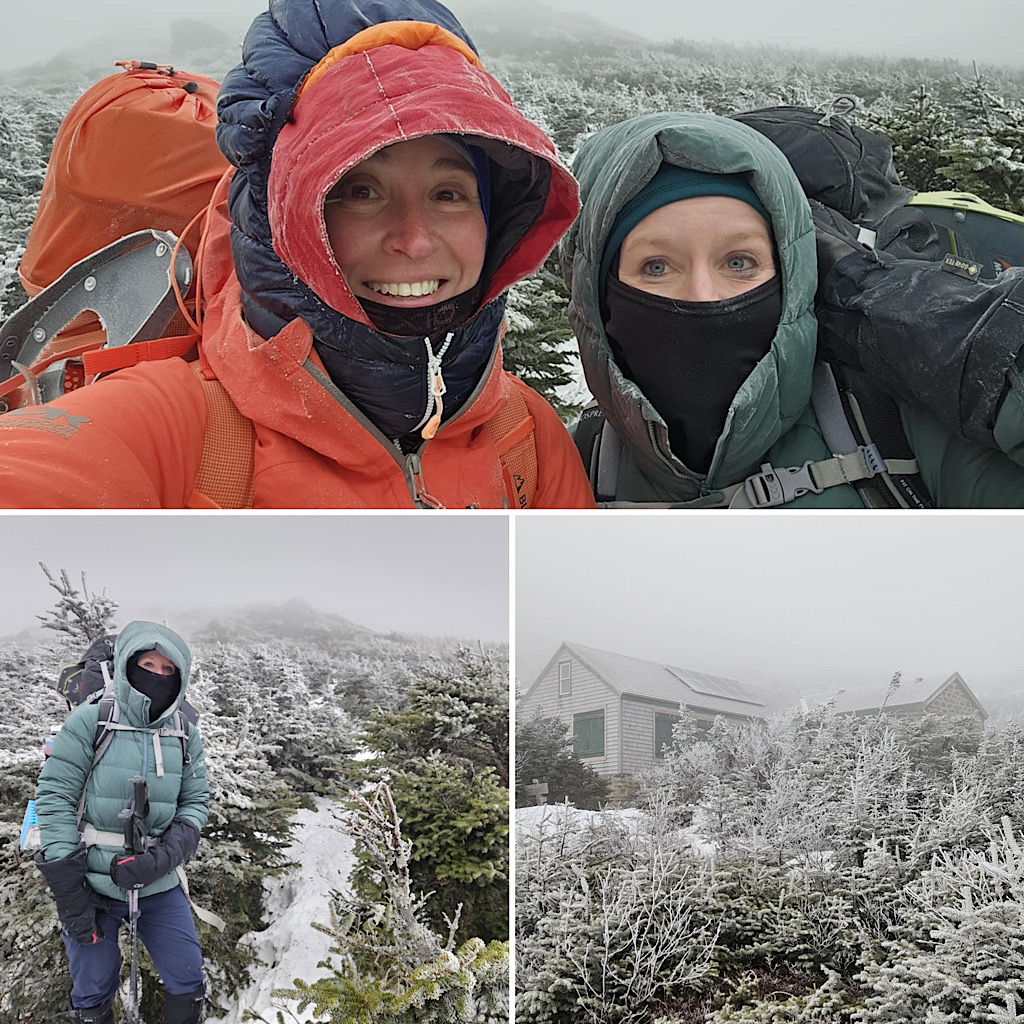
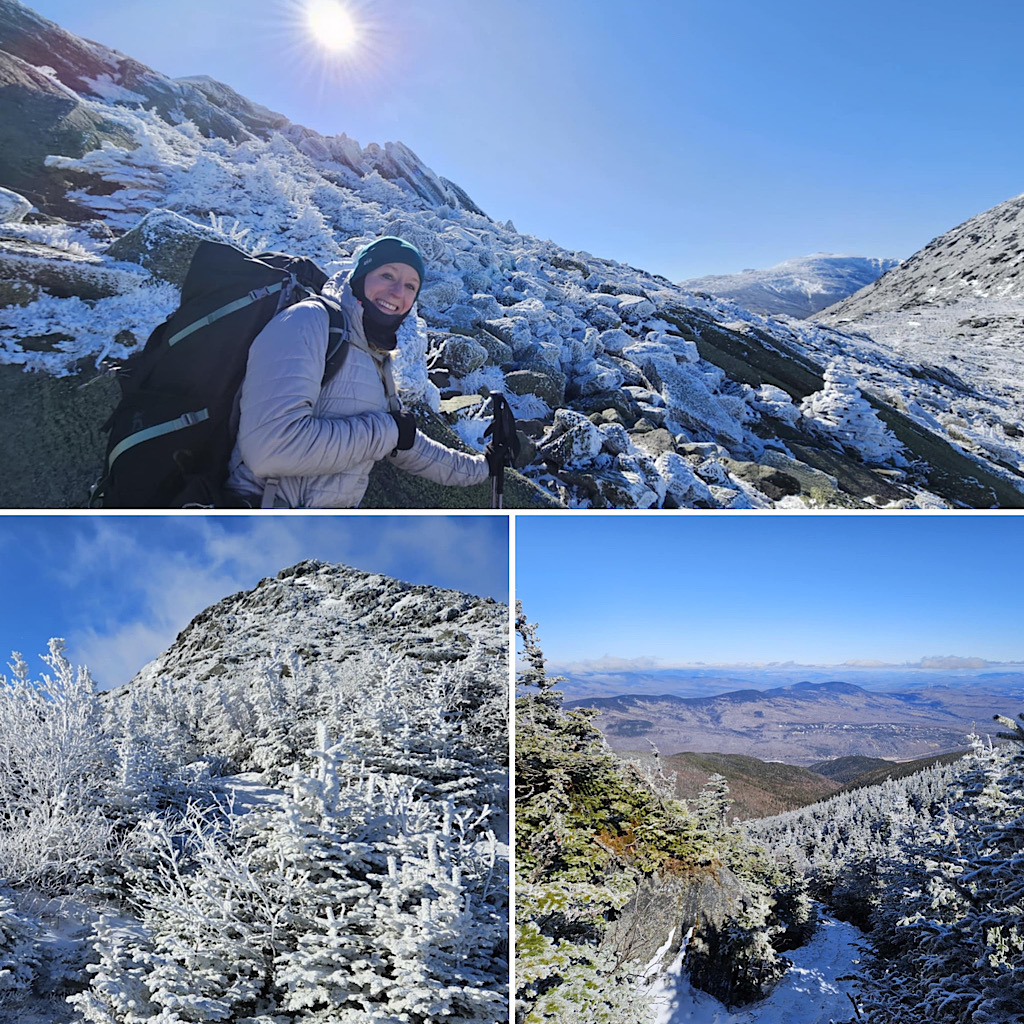
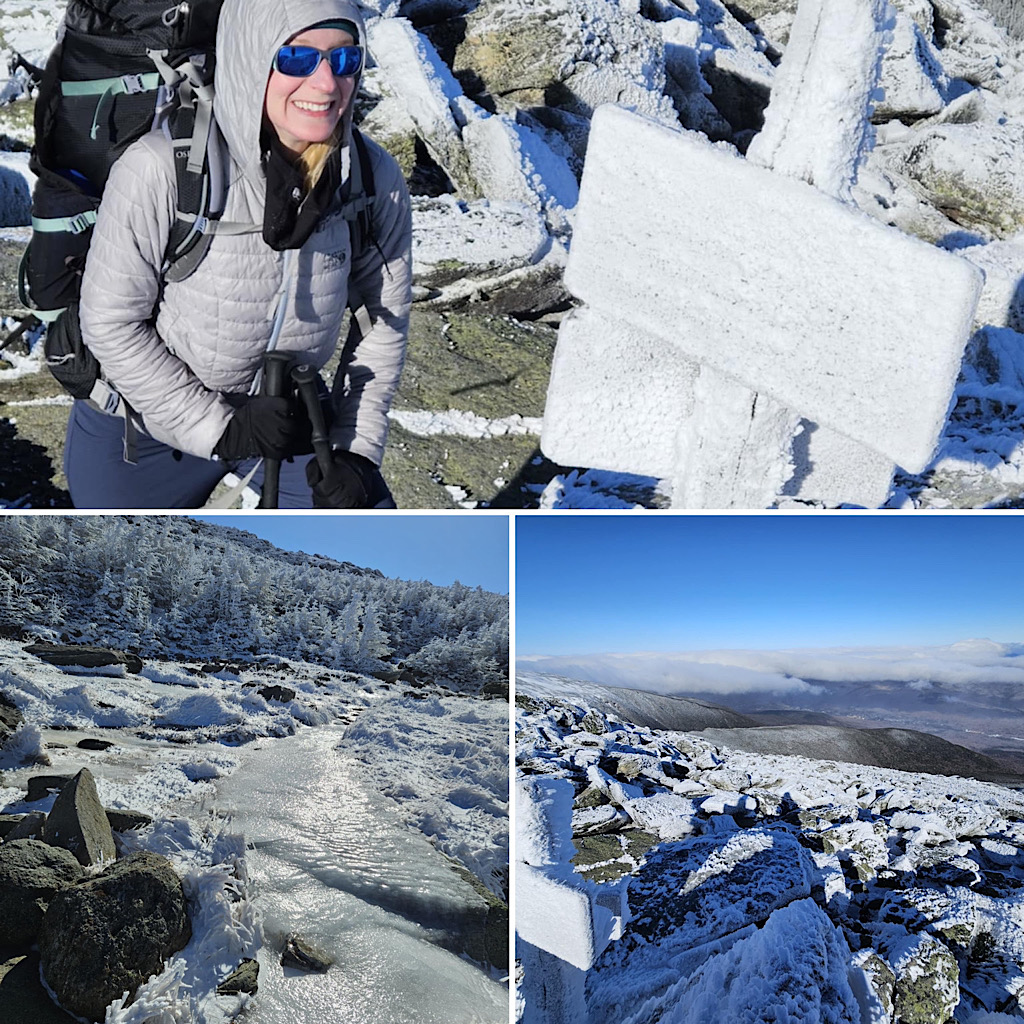
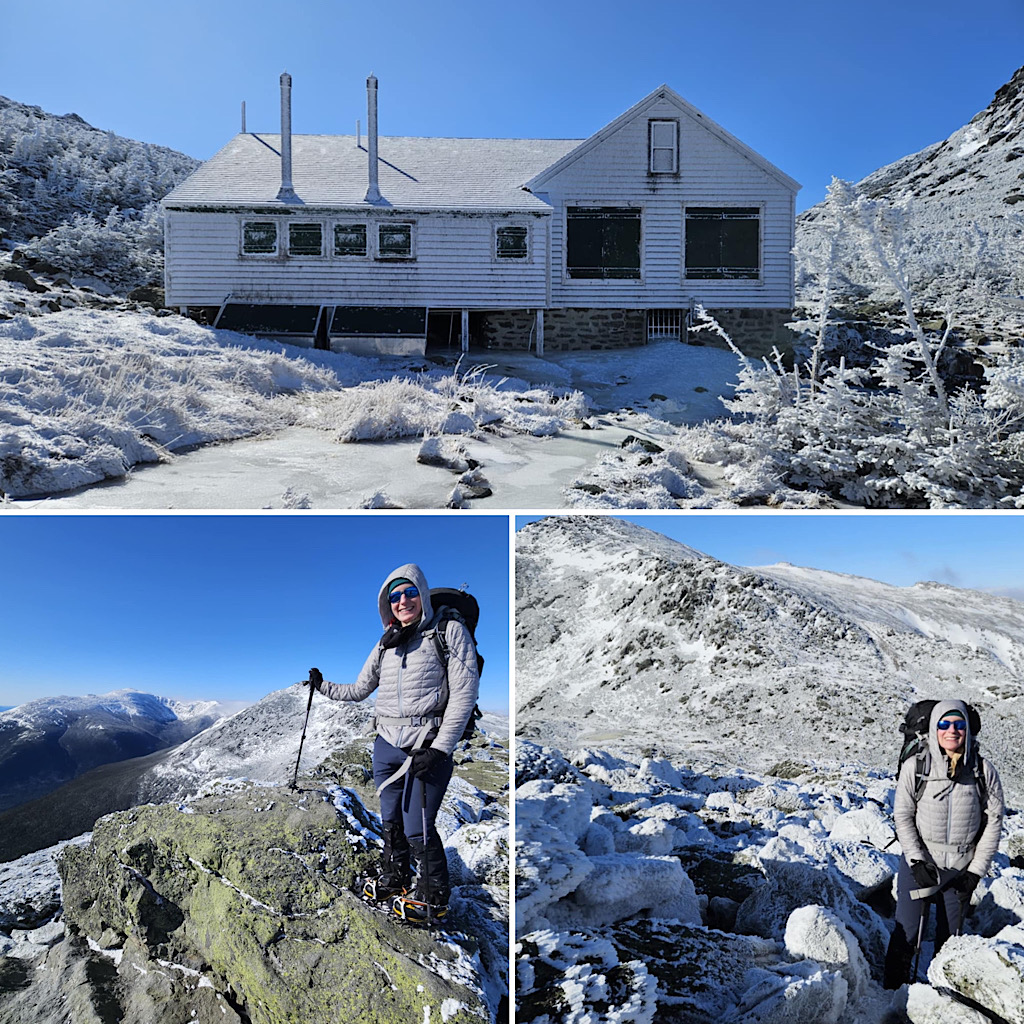
With heavy packs and crumbling trail conditions, we barely maintained 1000 feet of elevation gain per hour on the way up. We hoped that once we reached the ridge, the walk to our intended camp would be fairly quick, leaving adequate time to set up camp before sunset. But at treeline the trail conditions didn’t get better — they got worse. There was still a ton of water, but there was also unstable ice — a combination of previous ice collapsing and new glaze forming on the rocks. As we tried to step carefully to find solid footing and stay out of the water, we were getting blasted with high, gusty winds that made it hard to stay upright. As we followed the Gulfside Trail toward Mt. Adams, the combination of wind and tedious trail conditions made for very slow going. We discussed options, including the possibility of staying at the closer Gray Knob Cabin. Ultimately, the guest made the call: Rather than continue to duke it out with the wind on unstable trails, we would backtrack to Valley Way Tentsite and focus on snow camping skills.
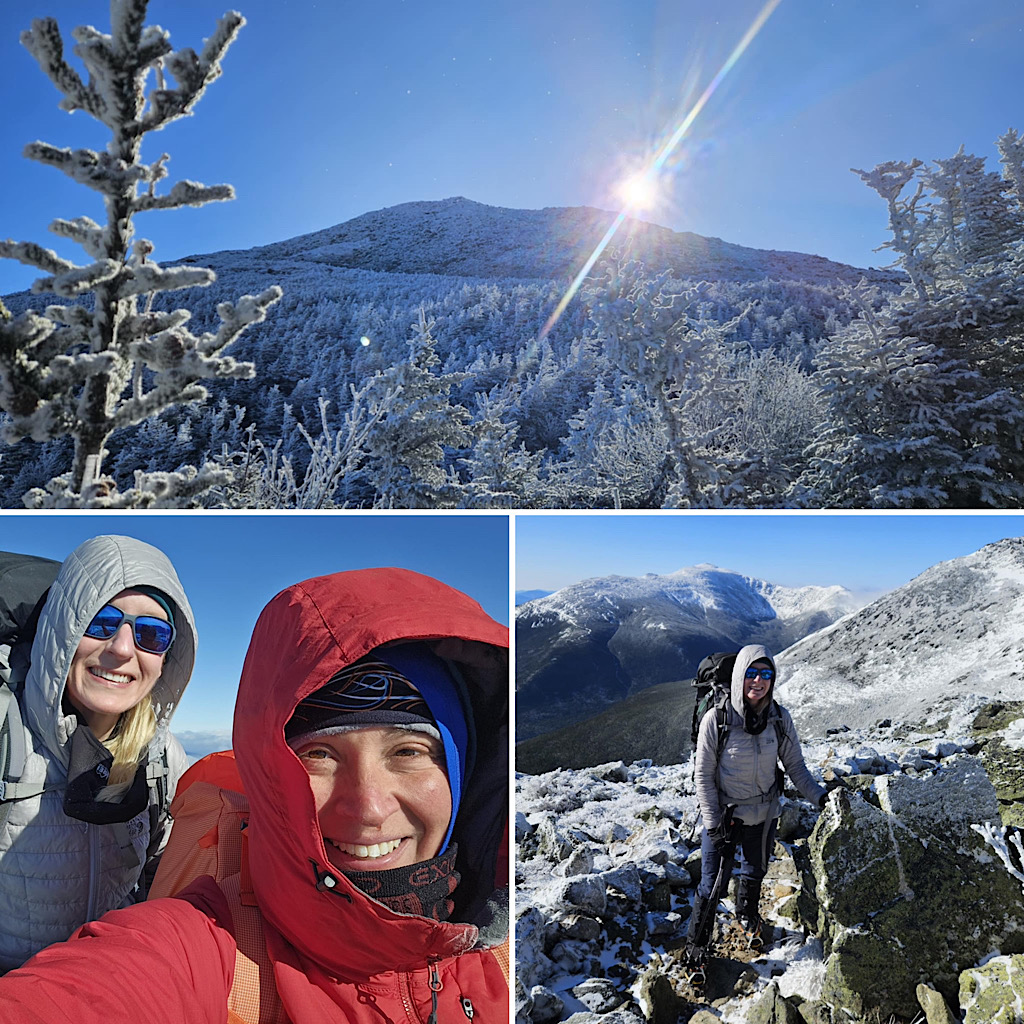
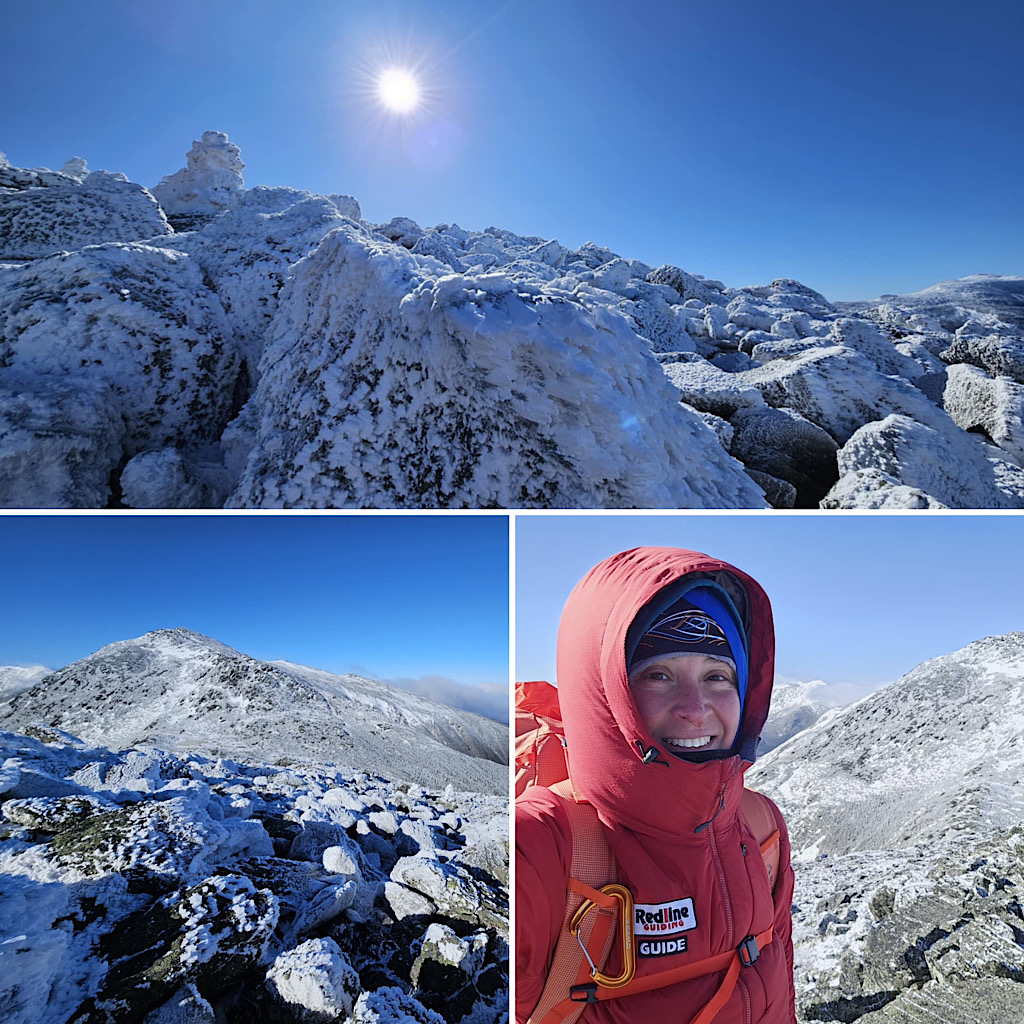
The next morning, the weather offered us a delightfully calm and sunny weather window, and we took advantage of the opportunity to summit Mt Madison. Thanks to the overnight drop in temperature, the trails had firmed up, and walking up the monorail to treeline was considerably easier than it had been the day before. The hike up to the summit cone of Mt Madison was relatively straightforward on rock with patches of solid ice and rime ice. The weather and views were great, and with improved conditions, I was itching to grab at least one more peak while the weather held. But the guest had a timeline she wanted to meet: be back to the car by 4PM so she could begin her long drive home. So, we returned to camp, packed up, and descended Valley Way, where trail conditions now presented a new challenge: everything that had been wet, slushy, and unstable the day before was now a solid sheet of ice. Even with good traction on our feet, conditions were horrendous. It was a slow and tedious descent, and it was almost 4 p.m. when we arrived back at the parking lot.
While the weather and ground conditions forced us to modify our plan, the guest was glad she got out to do some cold-weather camping and get some views in the Presidentials. I hope her summit weather on Denali is as beautiful as it was on Mt Madison! —Debra