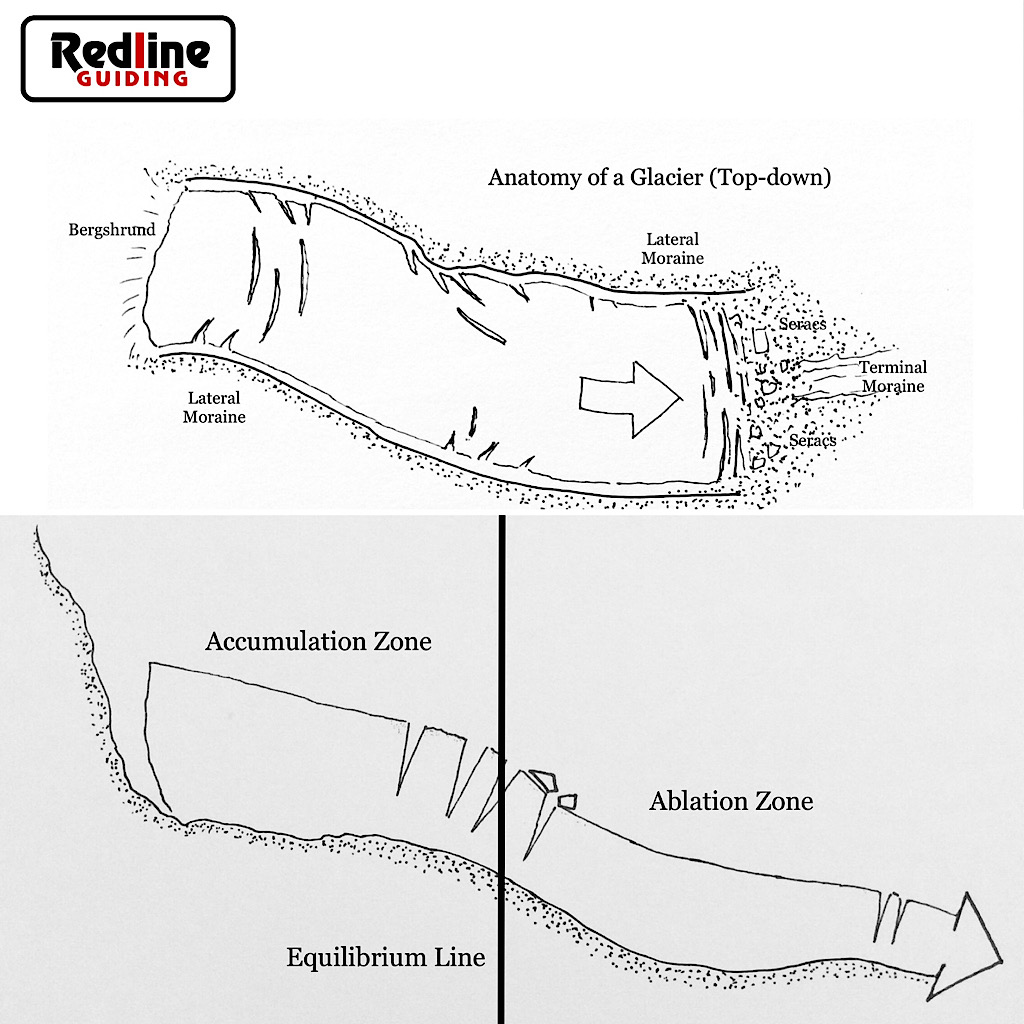
A glacier is analogue to a river of ice and snow. The “headwaters” of which are an area known as the “accumulation zone.” In this region snow piles up faster than it melts. Below this, nearing the “river delta,” so to speak, there is an area known as the “ablation zone.” In this lower region the snow melts faster than it accumulates. The demarcation of these two zones is known as the “equilibrium line.” All that said, it’s meaningless to us here in the Northeast. We have none of these features as there are no glaciers. Here all the snow melts and any snow or ice that remains is incidental and found in very small pockets in places like the Ice Caves, Ice Gulch, one spot along Great Gully Trail, etc.
This lack of glaciers doesn’t mean we can’t share our knowledge of and experiences in glaciated terrain. Glacier travel, crevasse rescue, and other facets of this subject can absolutely be shared with our guests, and for good reason more often than not. Many come to us for introductory glacier skills training before heading out west or to some other area of the world where glaciers do exist. These are shrinking areas as the equilibrium lines move further “up river” thanks for climate change, but that is a subject onto itself.
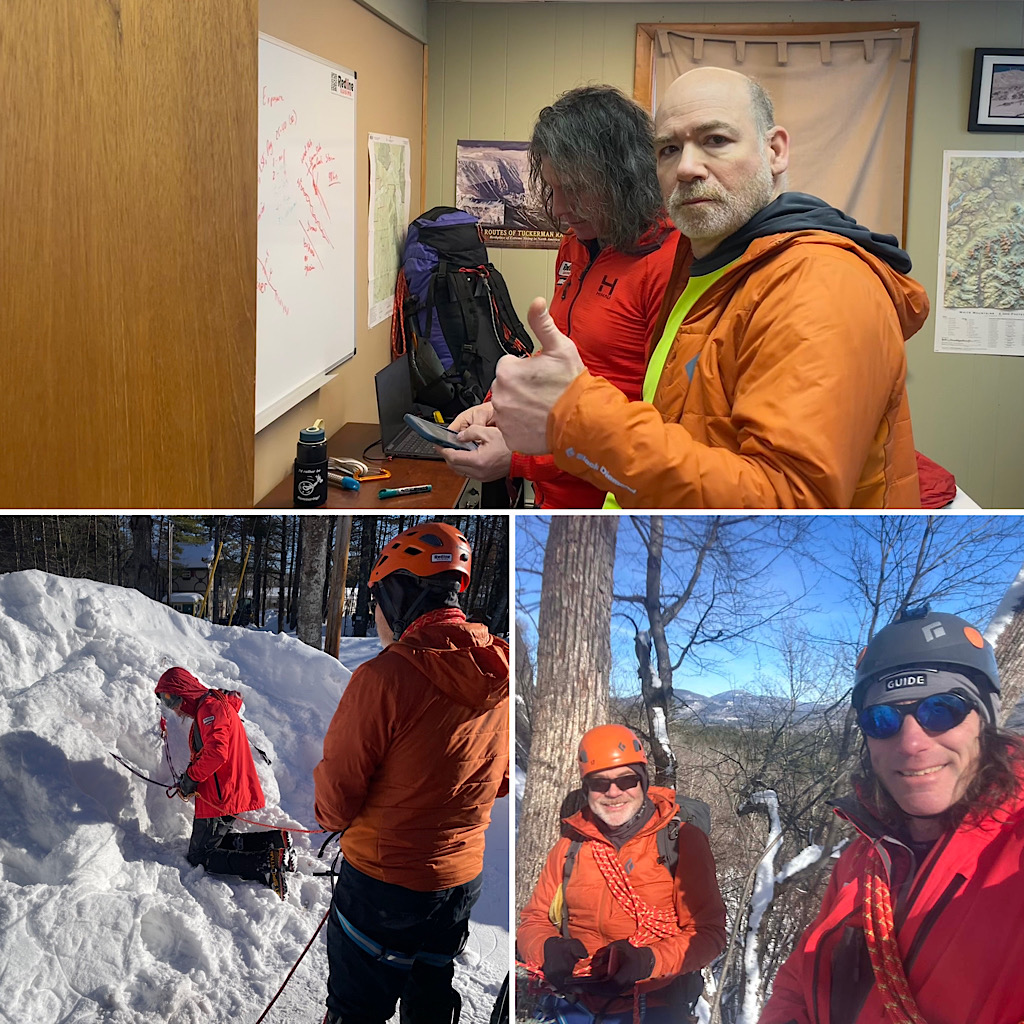
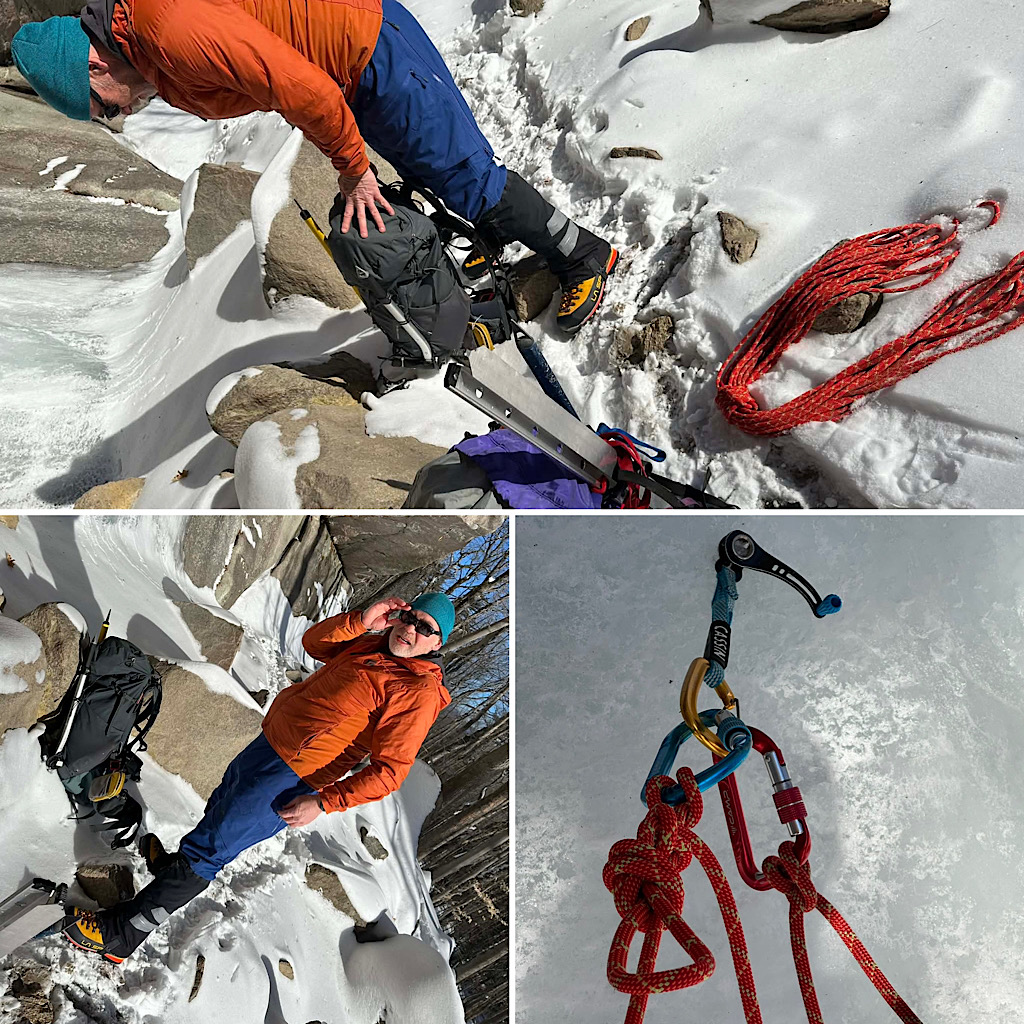
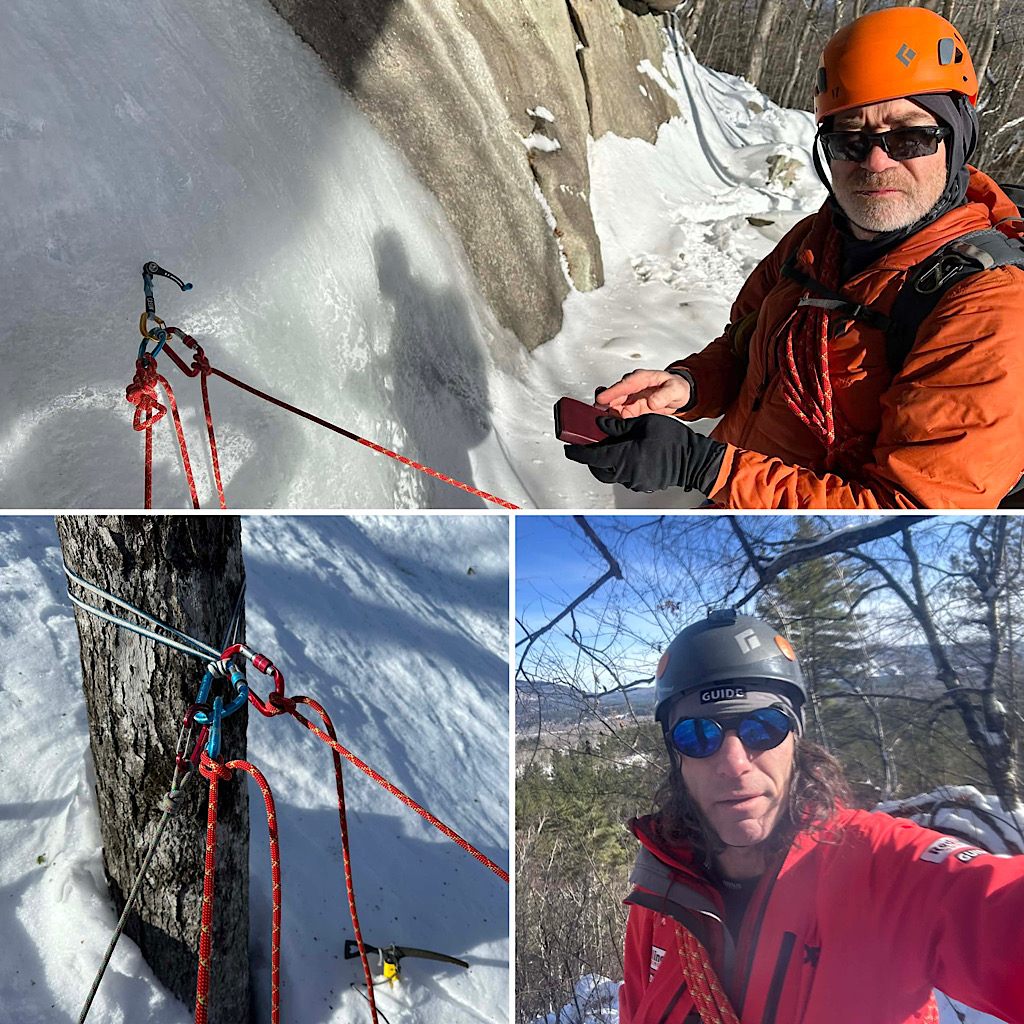
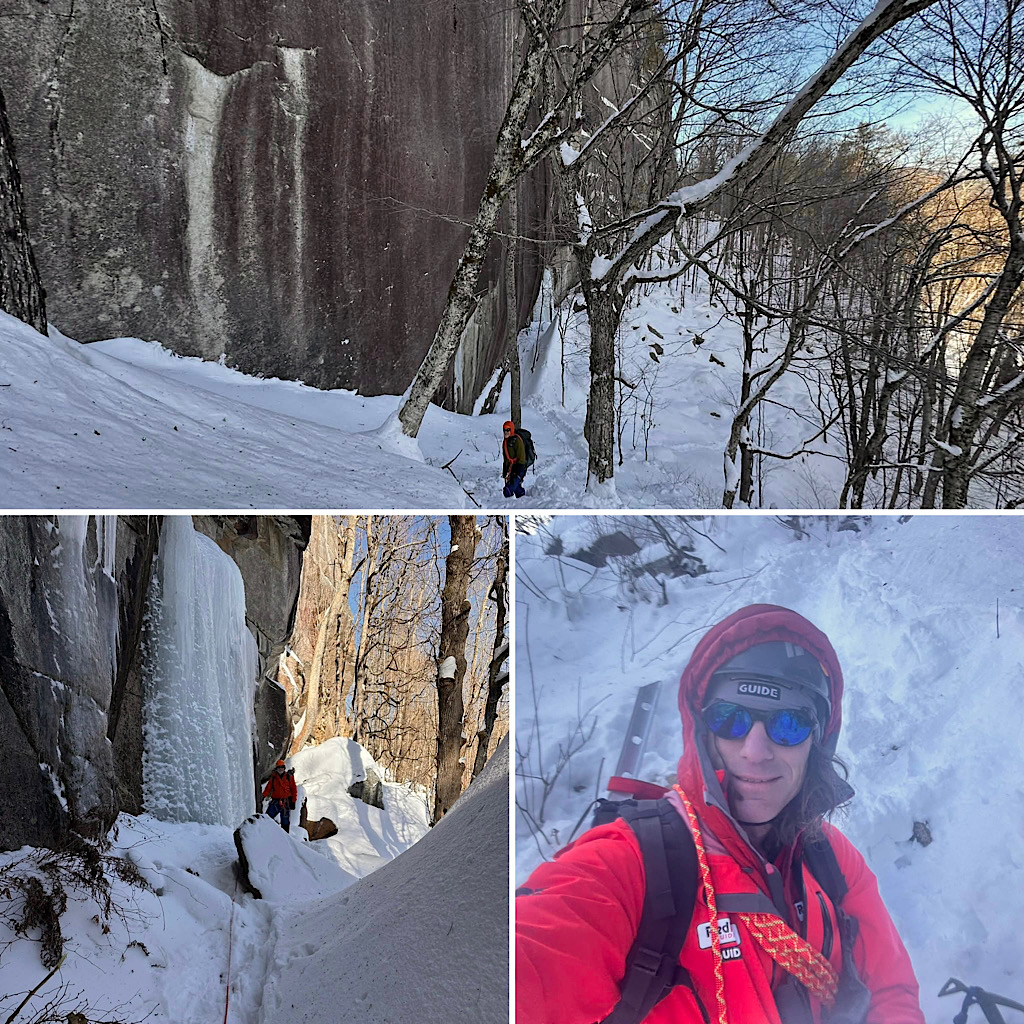
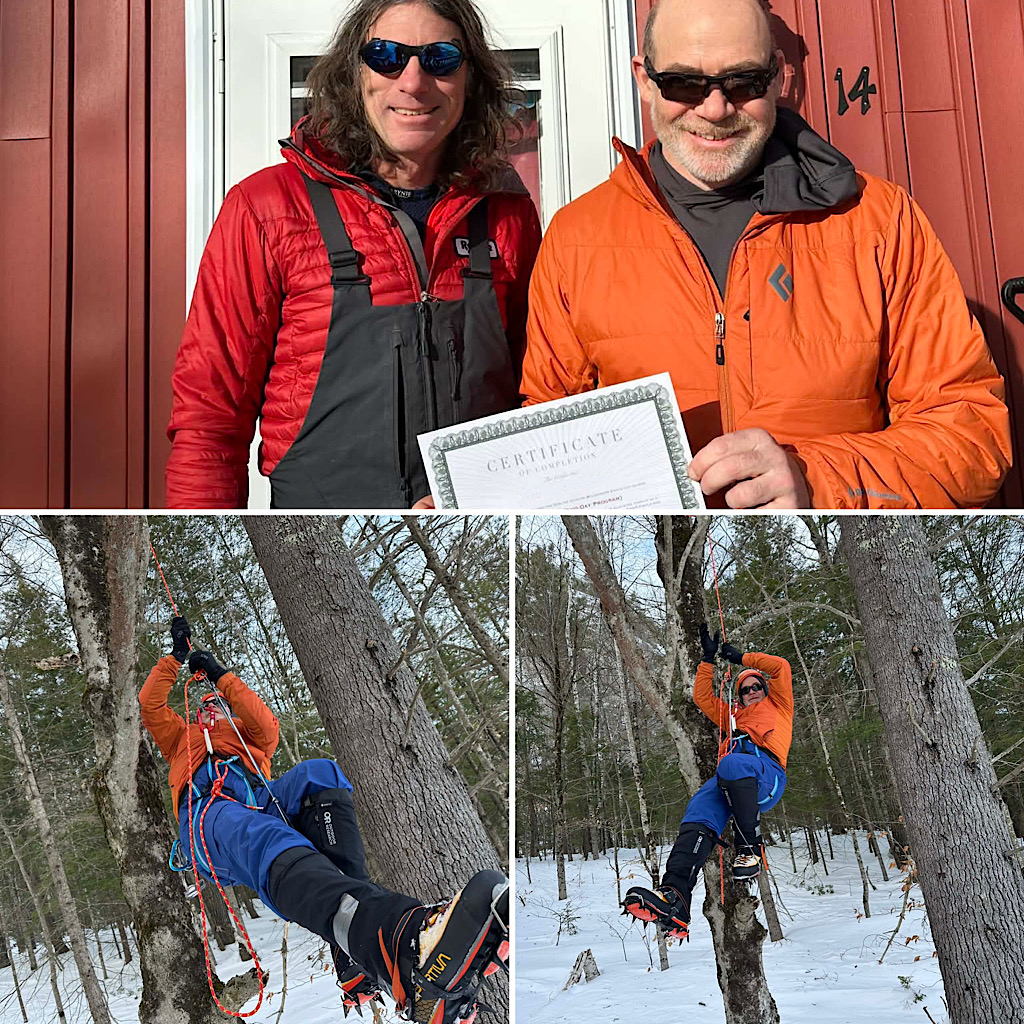
We just had a guest with us for a couple of days seeking this sort of training. It’s quite doable as long as we have snow slopes of various angles and dimensions, we can offer a richly reward experience. In this case our guest booked a two-day training experience, looking for greater depth of understanding and more repetition than our one-day offering. Leading this class was Redline Guide Will Murphy. Will has a considerable amount of experience on glaciated terrain so it was a natural fit that he shared what he knows. What follows are a few photos of this experience.